For officers
- Request to meet and a follow-up email
- Individual exception request
- Timeline log and deadline checklist
- Public records request
- Request for your own provider records
- Questions before you sign
- Written objection template
Evidence, Choice, and a Wellness Program
Officers Will Actually Use
Paperback $19.99 · Kindle $9.99234-page paperback
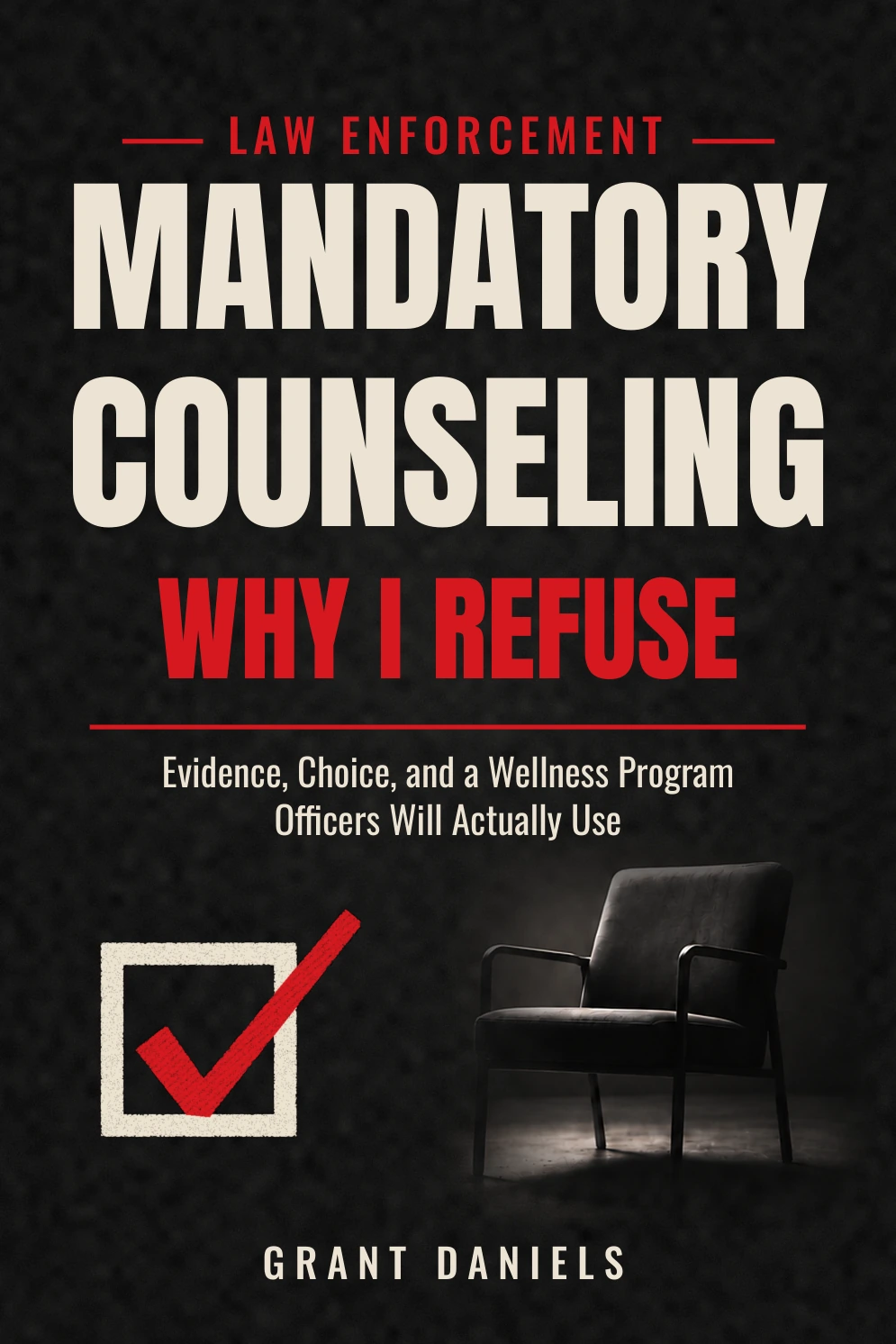
Officers are trained to ask hard questions.
Why should that stop when the subject is their own mental health?
If a wellness program needs the threat of punishment to get people through the door,
the problem is the program, not the officers!
Attend. Complete the session. Return the form.
Mandatory counseling can turn a deeply personal decision into an employment requirement. But where is the evidence that forcing attendance produces better outcomes than accessible, voluntary support?
Why I Refuse examines evidence, consent, provider interests, and administrative authority—and gives officers and leaders practical tools to act.
“I support therapy. I support access for officers and their families. I oppose treating an order as proof of care.”— GRANT DANIELS
Includes 13 practical templates, worksheets, and checklists, plus a union chapter with sample collective bargaining language.
Practical questions to test what a provider promises and how a program operates.
Chapter 11 also includes sample collective bargaining language for unions reviewing or negotiating wellness requirements.
Introduction
Also includes an appendix of tools for officers and leaders, research notes, and a table of authorities.
LAW ENFORCEMENT / MANDATORY COUNSELING
Evidence, Choice, and a Wellness Program
Officers Will Actually Use
Paperback ISBN: 9798167718623
Get your copy on AmazonExplore the book. Examine the sources.
Reach your own conclusion.
No. It supports accessible, voluntarily chosen care for officers and their families. Its focus is the requirement to attend, the justification for that requirement, and the boundaries of administrative authority.
Police officers across the United States, union and association representatives, peer-support teams, and leaders who design or oversee wellness programs.
Yes. The appendix includes meeting and follow-up templates, documentation tools, records-request guidance, and questions for officers and leaders reviewing a requirement or a wellness program.
The author explains his own position and asks readers to reach an informed decision. Chapter 10 discusses raising concerns and seeking review. Individual employment and legal decisions require advice suited to the reader’s circumstances.